Research

We pursue curiosity-driven science to understand how tissues and organs are built, function, and evolve. How do cells interact to build tissues? How do groups of cells generate collective functions? How did these biological systems evolve? To address these questions, we use simple model organisms such as Hydra, which has a simple body plan, a diffuse nervous system, and a gut. We combine molecular, physiological, and engineering approaches to uncover fundamental principles of how biological systems are organized and function.

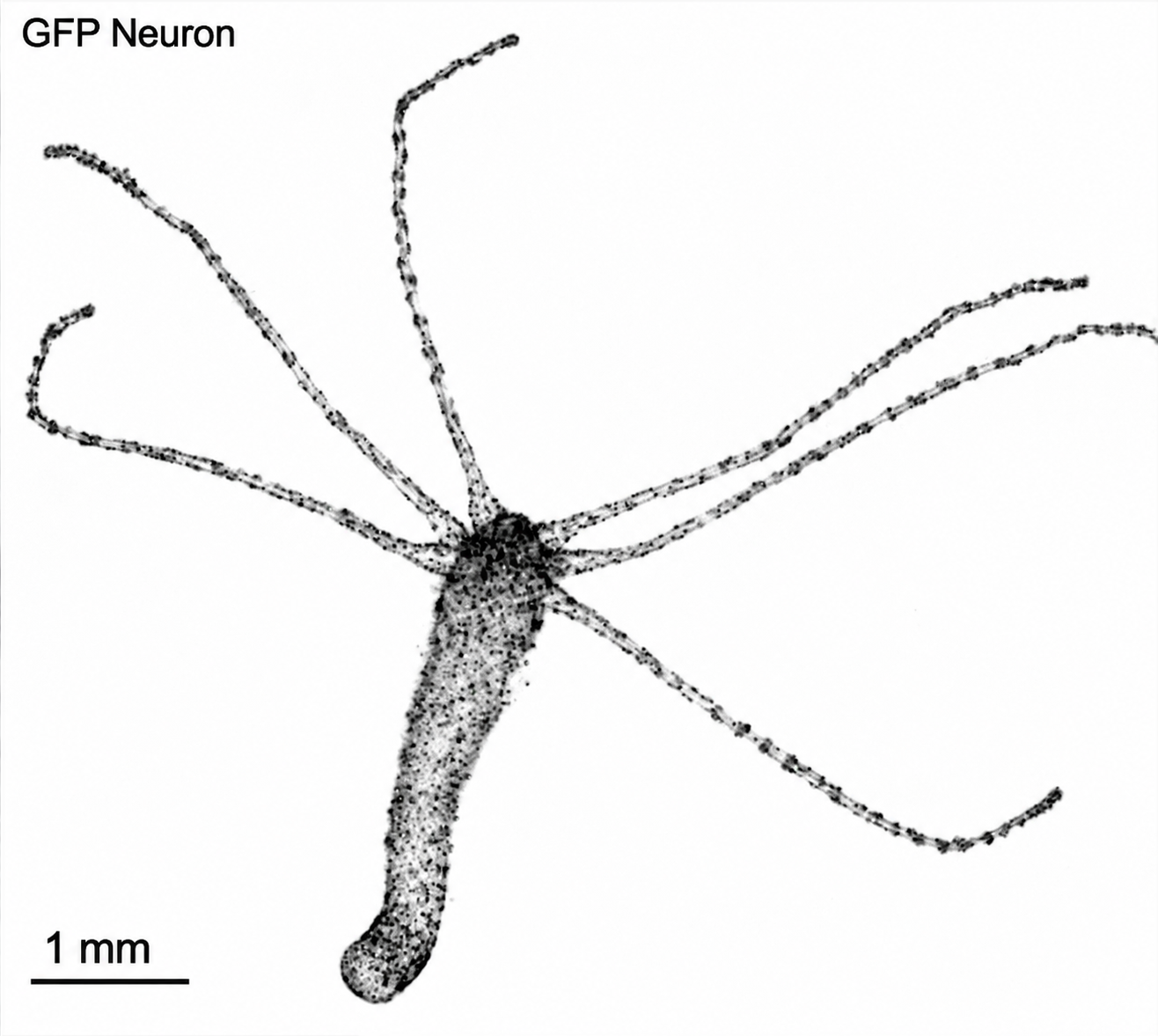
Microscopy image of Hydra GFP neurons.

From diffuse nervous systems to organized structures

How does a diffuse nerve net become organized into specialized neural structures?

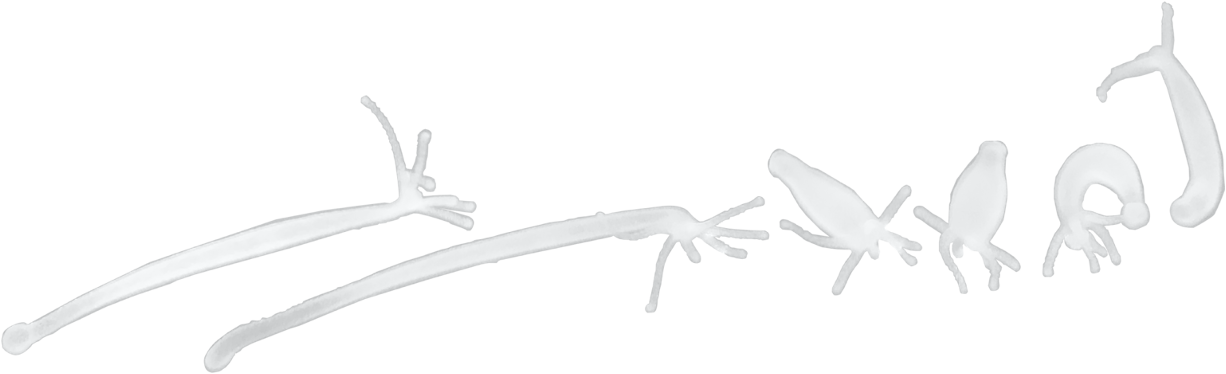
Hydra has only a few hundred neurons organized largely as distributed nerve nets, yet it produces sophisticated behaviors. Our previous work identified a neuropeptide-driven circuit that controls somersaulting and developed two-photon approaches to activate and ablate specific neurons in behaving animals.

Building on this work, we are investigating how distributed neuronal populations become organized into specialized structures and how changes in neuronal connectivity give rise to new behavioral functions during evolution.

Selected work
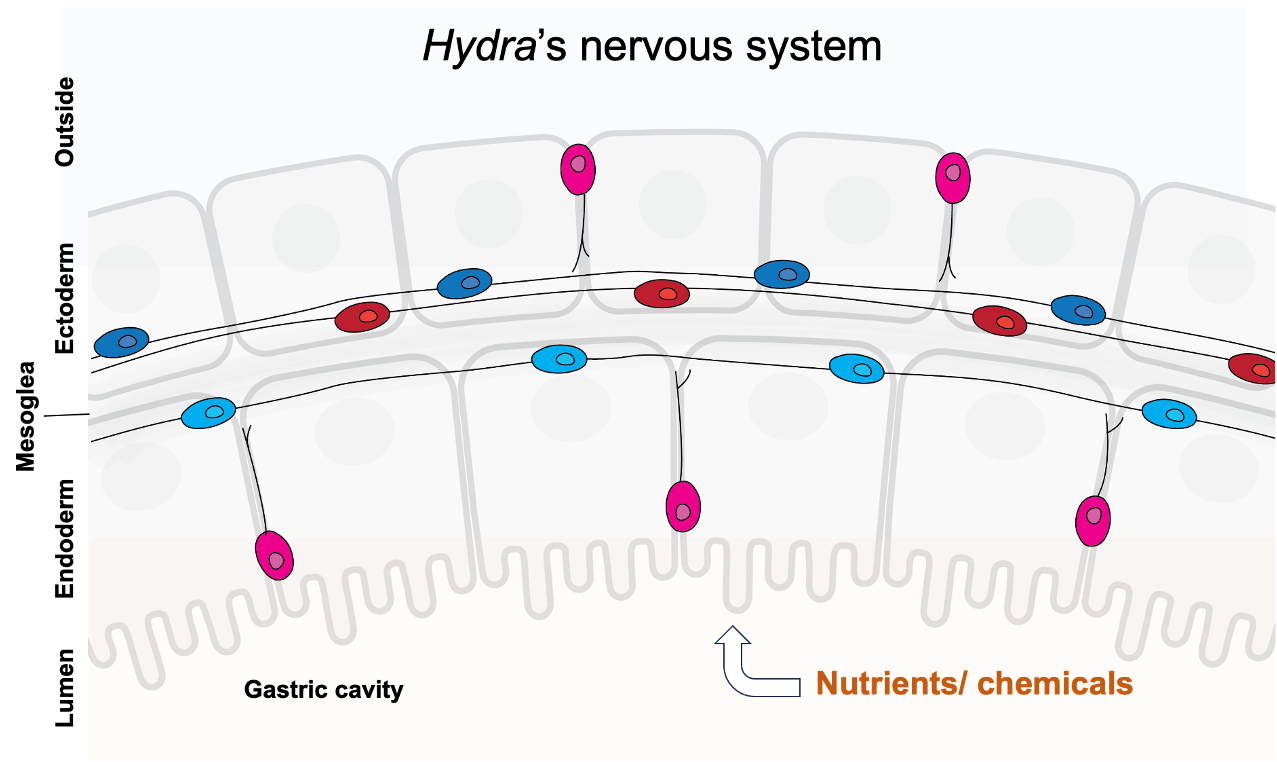
Schematic illustration of Hydra's nervous system and gut-nerve communication.

Gut–nerve communication

What were the original functions of nervous systems in gut regulation?

The nervous and digestive systems have been closely linked throughout animal evolution. We study how neurons sense and regulate the internal state of the body, including digestion, osmotic balance, and physiological homeostasis.

Our work showed that environmental osmolarity alters Hydra neural activity and behavior, and more recently identified a neural circuit that directly controls water excretion. We are now investigating how gut, epithelial, and neuronal cells communicate at the molecular level.